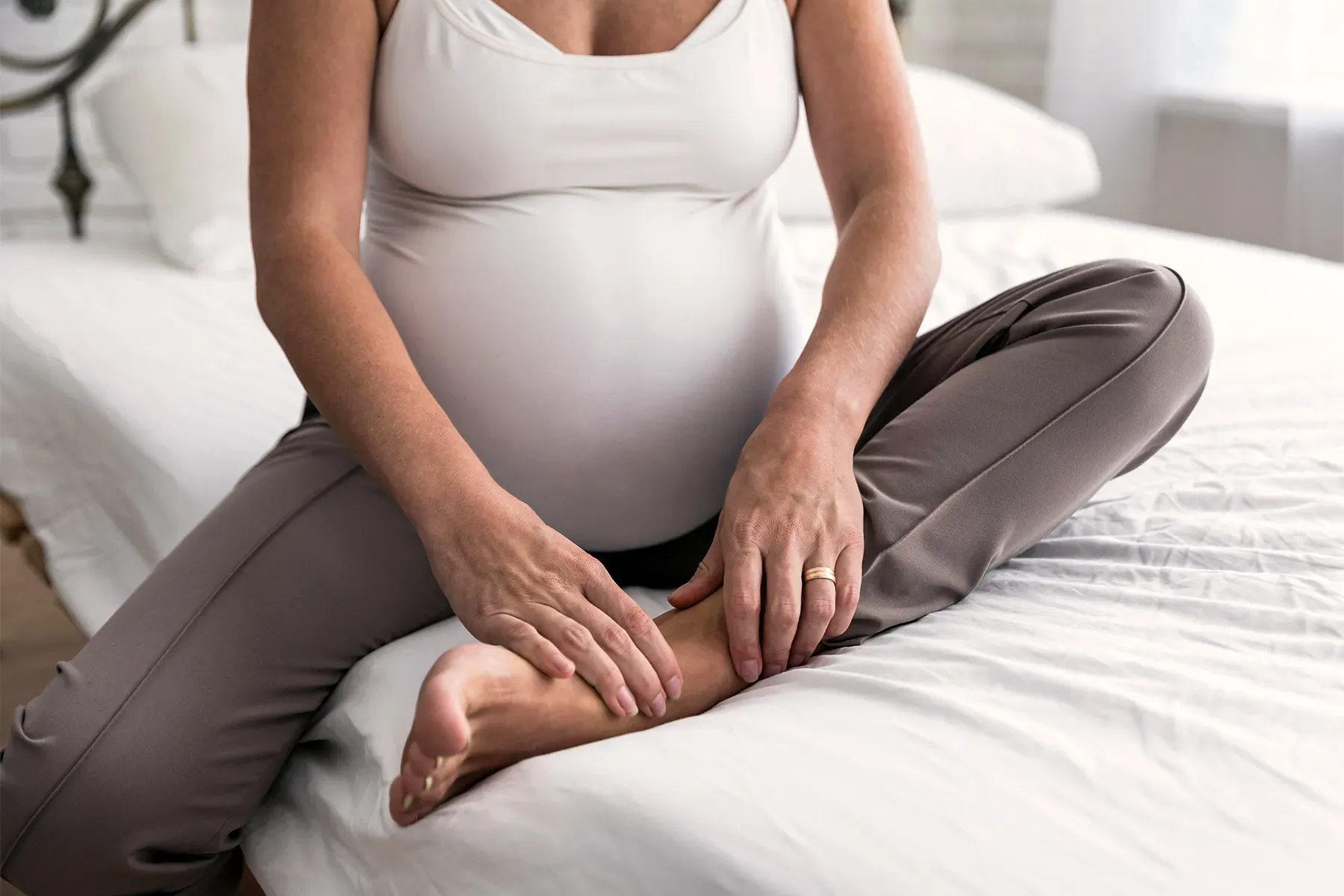
In the middle of my second trimester, I could no longer ignore the intense discomfort I was experiencing. “I feel so much pressure,” I told my midwife during my appointment. “You know,” I added dramatically, “Down there.”
“Down there?” my midwife echoed, clearly puzzled. “Are you referring to your perineum?”
I nodded, feeling a mix of embarrassment and urgency. “It’s like everything down there could just fall out! There’s so much pressure and swelling. Honestly, it feels like it might just slide down to my knees.”
“Sounds like you might have vulvar varicosities,” she said with a straight face.
Wait, what? Did she just say vulvar? The adolescent girl inside me recoiled in horror, thinking, “Ewww!” Great, I had developed varicose veins in my vulva. My midwife explained that these varicosities were a result of increased blood flow and the pressure from my expanding uterus. Basically, it was like having hemorrhoids—just a little closer to home.
Sadly, there’s no cure for vulvar varicosities. For some temporary relief, my midwife suggested a vulvar supporter—essentially thick elastic bands designed to lift and support the perineum. I opted to order one online, as there was no way I was purchasing that in person. It resembled a jockstrap with a hint of lace to indicate the front. I squeezed into it, attempting to check how it looked beneath my growing belly.
From across the room, my husband mumbled, “Very sexy.”
I shot him a look that clearly conveyed, “If you ever want to have sex again, you better zip it NOW.”
While the supporter did provide some physical relief, I was an emotional wreck over this situation. How was I supposed to respond when someone asked about my pregnancy? “Oh, my vulvar varicosities are quite uncomfortable today, but thankfully I have my lovely supporter. What’s new with you?”
Interestingly, my midwife shared that she had also dealt with vulvar varicosities during her own pregnancy. She reassured me that I wasn’t alone; many other pregnant women faced this issue too. But who were these women? Besides my midwife, I didn’t know anyone else dealing with this. Pregnant women openly discuss morning sickness and cravings, yet vulvar varicosities remained a taboo topic. Did celebrities like Jennifer Aniston or Taylor Swift experience this? Crickets echoed in my mind. I trudged through the rest of my pregnancy in silence, with those thick elastic bands as my only companions.
After the birth of my daughter, the pressure eased, and by my six-week postpartum checkup, my veins had returned to normal. The vulvar supporter quickly faded into a distant memory.
Occasionally, I ask other pregnant women how they’re doing. Most respond with a simple “Fine” or a groan about morning sickness. But I can’t help but wonder if maybe, just maybe, they’re silently suffering from vulvar varicosities too. I wish I could offer them support—or at the very least, tell them where to find a supporter.
If you’re navigating similar challenges, you might find this article on fertility boosters for men from our other blog insightful. For more information on pregnancy and home insemination, check out this excellent resource on IVF.
Summary
Experiencing vulvar varicosities during pregnancy can be a challenging and often unspoken issue. While there are no cures, some temporary relief options exist. Many women suffer in silence, longing for support and understanding as they navigate the discomfort of these varicosities.
Leave a Reply